Release notesRelease notes, 19 October 2026
Release notes, 19 October 2026
If you used our Next.js steps, check your file answers at its full address. The builder examples now say they are examples.
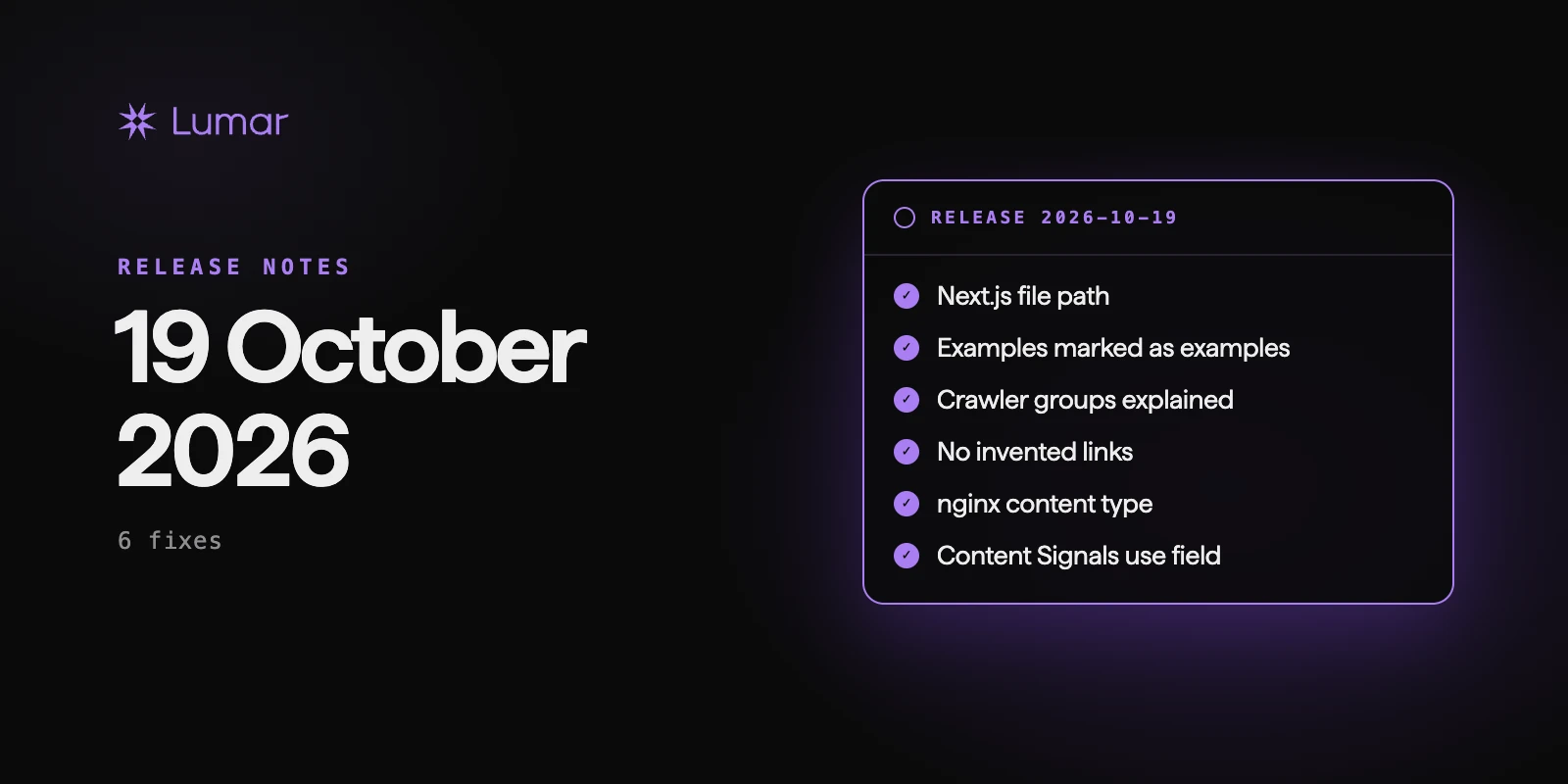
Summary
If you used our Next.js steps for robots.txt, llms.txt or a file under /.well-known/, check that the file answers at its full address, such as /robots.txt. If it only answers without the extension, rename the folder to the full name, extension included. No check changed what it flags, so your scan results are the same.
Fixed
- Next.js: the builders now put a route handler in a folder named after the whole path, such as
app/robots.txt/route.ts, as in Next.js's own example. We were dropping the extension, andapp/robots/route.tsserves /robots, not /robots.txt. - Guides: the example file is now labelled as an example whose values were chosen for our tests, and site-wide examples keep their example.com addresses instead of showing made-up paths on your domain. The robots.txt guide now points to the builders that write the file from your answers.
- robots.txt: the guide now says that a crawler named in its own group ignores the
*group, because RFC 9309 sends a crawler to the*group only "if no matching group exists". Repeat any Disallow you want it to keep. - llms.txt: the template no longer lists pages that may not exist on your site. Placeholders are marked as placeholders.
- nginx: the snippet now sets the content type itself rather than leaving it to the file extension.
- Content Signals: the docs now explain the optional
usefield (immediate,referenceorfull), which Cloudflare documents and our check already accepted.